
adaptive triathlon training
Adaptive Triathlon Training for Changing Weeks
A plan should not collapse because you missed a run, slept badly, or had to move a key ride. Adaptation is the difference between a calendar and coaching.
Best for
Athletes who have outgrown static plans and want the week to respond without losing the long-term race build.
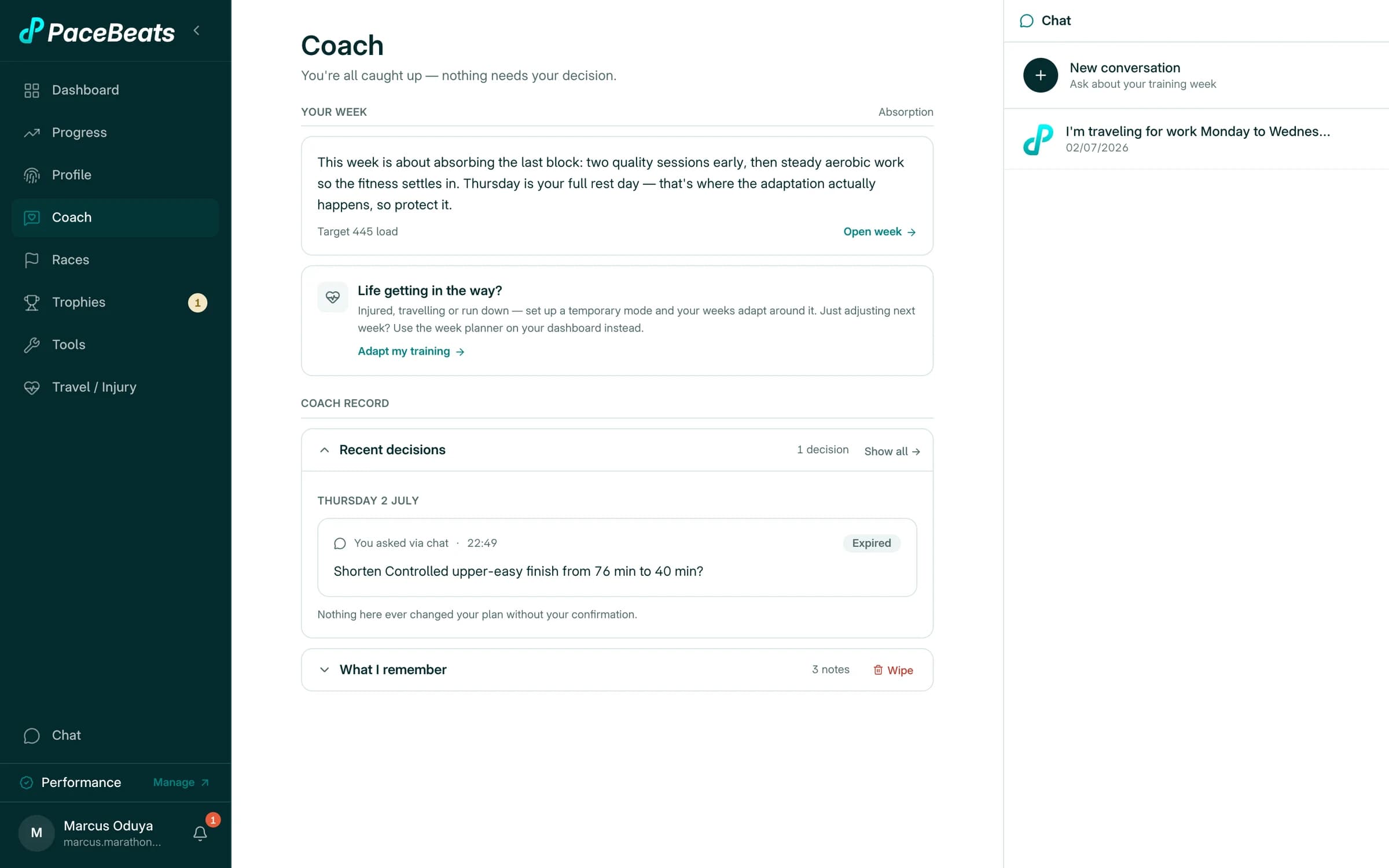
Representative seeded product data — a plan-change proposal as the athlete sees it: what changes, why, and nothing applied until you confirm.
What actually triggers a rebuild
Adaptation is not a mystery box. Every week, next week is rebuilt around your availability, your races, and your constraints — and four concrete things feed that rebuild: what you flag, what you set once, what you miss, and what you say about how it felt.
- Flag travel, illness, or a brutal work week — next week is rebuilt around it
- Constraints you set once — 'no Monday runs,' 'travel every third week' — carry forward automatically
- A missed key session can trigger a rebalancing proposal instead of blind stacking
- Rate how sessions felt in your own words — athlete memory shapes how future workouts are written
- Any change to a plan you already have arrives as a proposal you confirm, with the before-and-after numbers for each session it would move
What the guardrails do
Deterministic sports-science rules stay in charge of your training load — volume caps, recovery constraints, progressive overload, taper validation. They are what stops a rebuilt week from turning into a catch-up week.
- Weekly load jumps are capped, so ambition can't outrun adaptation
- Recovery weeks are planned before fatigue forces them
- Race priority decides which sessions are protected and which flex in a short week
- Load caps prevent catch-up weeks from becoming overload weeks
- The taper reduces accumulated fatigue while keeping race rhythm
A compressed week, in practice
Say a three-day work trip lands mid-build: Tuesday to Thursday, hotel gym only. You flag it, and the week is rebuilt around what is left rather than around what was already written. The long ride and the key run survive. The supporting sessions shrink or go. Nothing gets crammed into Friday, and the week after the trip is not allowed to become a catch-up week.
- The anchor sessions are protected first — the long ride and the race-specific run
- Supporting swims and easy runs shrink or drop rather than being crushed into the days you do have
- Missed sessions are not stacked into the next two days
- Load caps keep the following week inside a progression you can absorb
- Your race date doesn't move — the route to it does
Signs you've outgrown a static plan
Static plans work when life is stable. Adaptive training earns its place when the same calendar breaks every month.
- Your work schedule changes week to week
- You miss workouts and don't know what to salvage
- You train by feel but want guardrails on the load
- You need swim, bike, run, and strength decisions explained, not guessed
Questions athletes ask
Is adaptive training the same as changing workouts every day?
No. Adaptation should be deliberate. The goal is to preserve race preparation while responding to meaningful changes in performance, recovery, or schedule.
Can adaptive training reduce avoidable load mistakes?
It can limit abrupt progression and make fatigue, missed sessions, and reported soreness visible in weekly decisions. It cannot predict or prevent injury, and pain or illness needs qualified medical judgment.
Do I need a Garmin?
No. You can start by answering questions about your recent training and availability, then connect Garmin later. Garmin adds automatic activity sync and lets you send supported structured workouts to your device. Wahoo can also import your recorded activities and receive structured cycling workouts, independently or alongside Garmin. You can also upload supported activity files or log training manually. History-based insights depend on the data available.
Next step